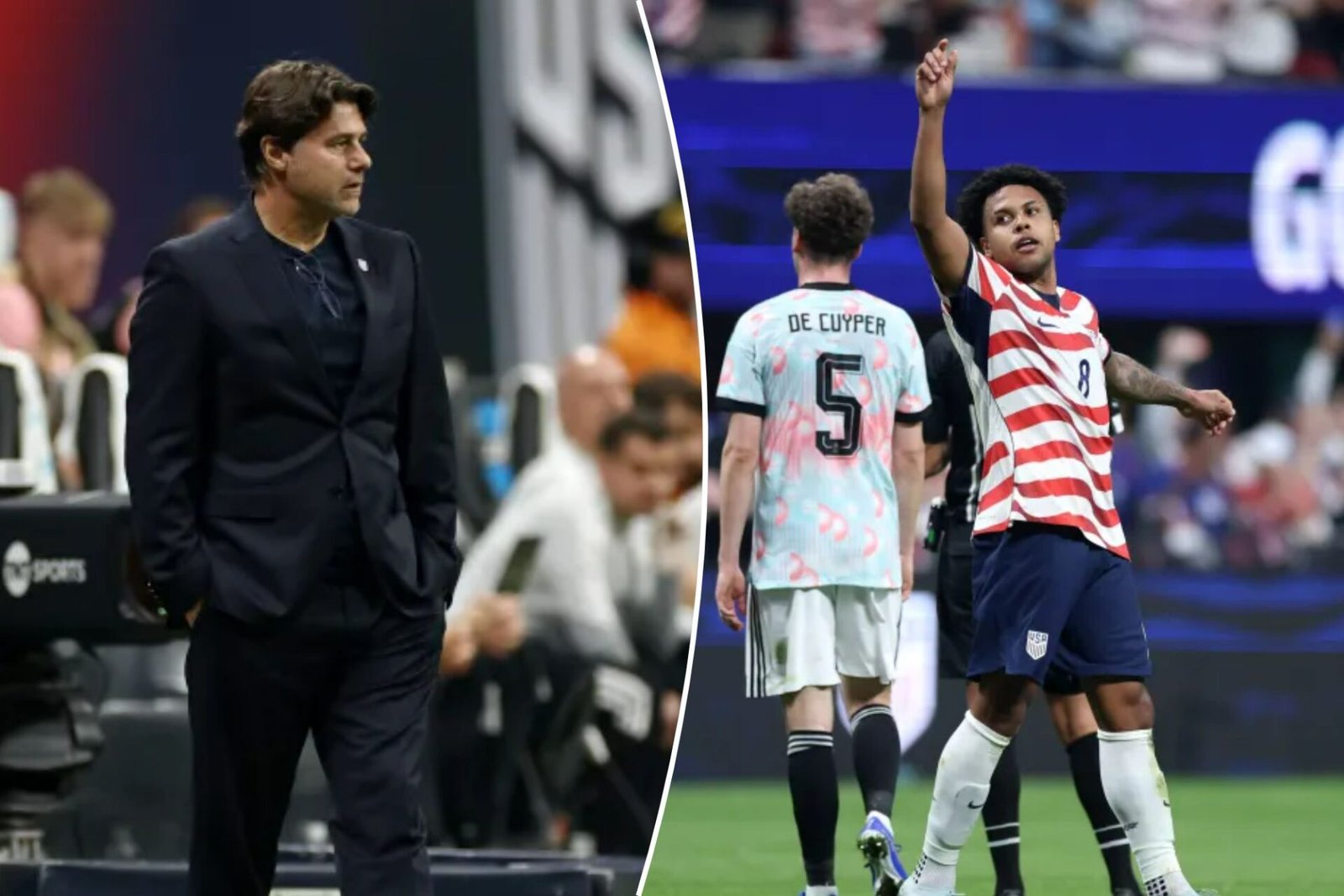
UMNST’s Belgium test becomes their World Cup benchmark
A Harsh Reality Check for the U.S. Men’s National Team
ATLANTA — Mauricio Pochettino spent his first 18 months as coach of the U.S. men’s national team focused on transforming the culture. He emphasized that there was no A-team, and nothing would be handed out. He brought in new faces and introduced fresh slogans. He experimented with tactics, finding some success with a switch to a 3-4-3 formation during September camp that led to positive results in October and November.
If the wins against Paraguay and Uruguay four months ago felt like a validation of everything Pochettino had done so far, then Saturday’s 5-2 loss to Belgium served as a reminder that there is still much work to be done. The U.S. lineup in that match was nearly its most talented possible XI, yet they struggled to maintain consistency.
There are tactical questions to address after reverting to a 4-2-3-1 formation, which left the Americans vulnerable on the wings. However, the main issue lies in questions of identity and intensity. For about 35 minutes, the U.S. looked like the better team because they were the more desperate one. This has always been the identity of the program when it performs at its best.
This group is the most talented they’ve ever had, but not talented enough to change that reality.
Intensity and Consistency Remain Challenges
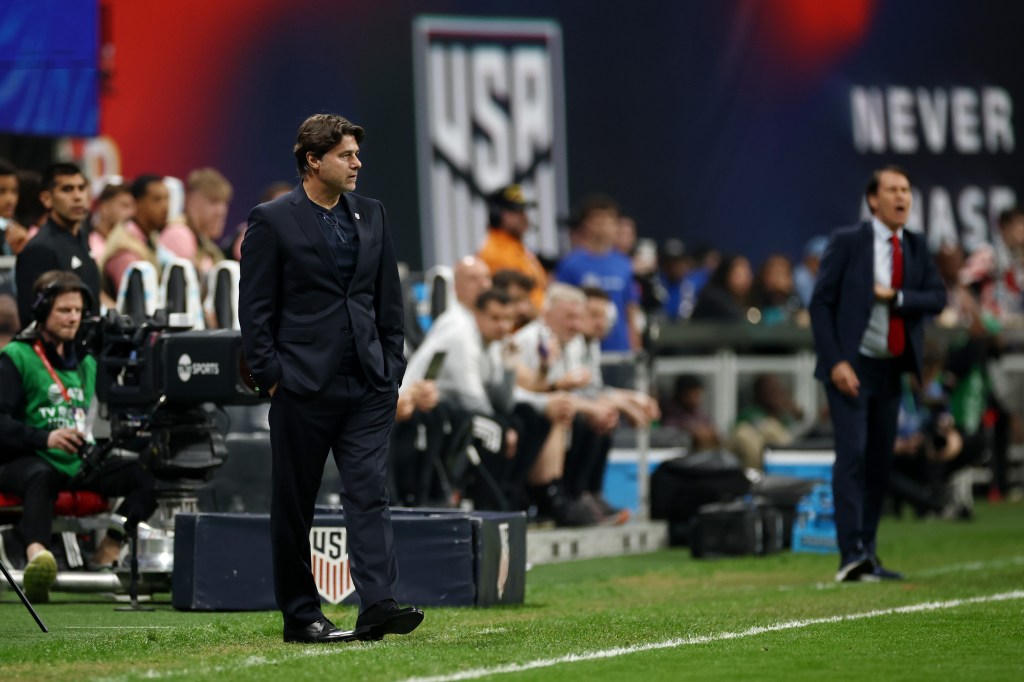
“The moments we matched the intensity of Belgium, we were even or in some moments better,” Pochettino said. “But as soon as we drop a little bit in our intensity, and how you can confirm that is in too many actions that we were in place, we have superiority, but we were not aggressive enough.”
“Like the way we concede the first goal. In this action, I think we have 10 players inside the box but we were not aggressive enough. We didn’t keep that energy during the whole time. I think that is the challenge. That is the challenge and it’s a good reality check for us.”
Indeed, there were three Americans — Antonee Robinson, Johnny Cardoso, and Folarin Balogun — in the vicinity of Zeno Debast when the ball rebounded to the Belgium defender outside the box in the 45th minute. All were lax in attempting to close down his space, allowing him to get a shot off that tied the game and changed the momentum completely.
It wasn’t the only time the U.S. looked not just second best, but willing to accept it.
Learning from the Lessons of the World Cup Build-Up
What bites even more is that when Pochettino and his players talked about how good they looked for parts of the game, they were absolutely right. For the better part of the first half, the Americans were going toe-to-toe with Belgium.
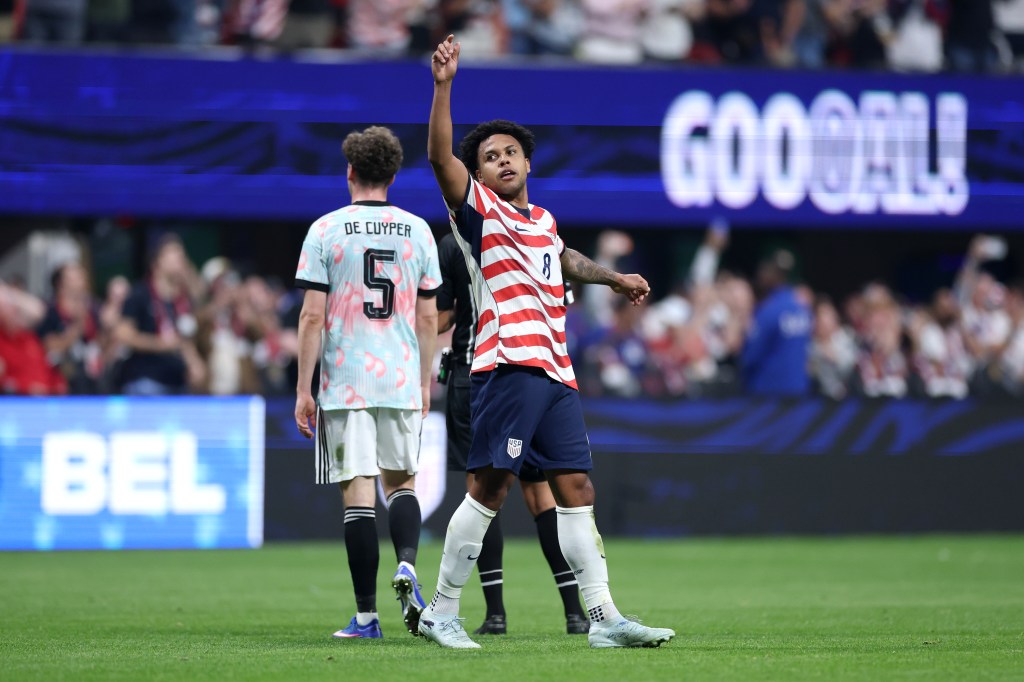
“That’s one of the things we can work on for sure,” Weston McKennie said. “Being able to stay consistent in how we start the game to how we finish it with the same intensity and everything.”
The decision to schedule a series of top opponents in the run-up to the World Cup — Belgium on Saturday, Portugal on Tuesday, then Senegal and Germany in a couple of months right before the Americans head to their base camp in Irvine, Calif. — only underscores that.
None of the teams they played in the fall were pushovers, to be fair. But this is a different level, and one the U.S. needs to find a way to reach. They got a harsh lesson on Saturday. They can’t wait another game for it to sink in.
“We need to have 26 players that believe in that, that have the capacity to be intense in every single action,” Pochettino said. “It’s not one action and then I need one minute to recover.”
“The problem is that the time to recover the ball, where you don’t have the ball, if you start chasing the ball and you don’t have energy, and then you miss the energy in the key areas. That happens right away. Today is a clear idea, a clear image, example, that in the key areas, we didn’t have the right energy.”
