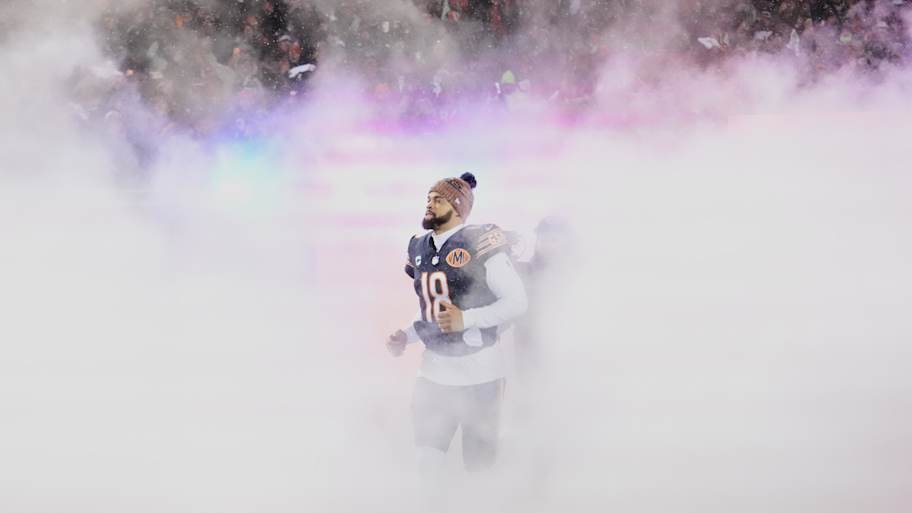
Settling the Caleb Williams-George Gervin Iceman Debate Once and for All
The Legacy of the Iceman
In modern sports, it’s not uncommon for athletes from previous generations to be overshadowed by newer stars. This often happens as players and fans age, and their memories fade into the background. However, there are moments when these older legends still hold a special place in the hearts of many.
Colston Loveland, a young athlete who recently entered the NFL, made headlines when he claimed that LeBron James was the king of basketball rather than Michael Jordan. His remarks were met with polite laughter, but they also highlighted how some younger athletes may not fully grasp the historical significance of past icons. For many, Michael Jordan remains the undisputed king of basketball, while LeBron James is seen as the current reigning champion.
This isn’t just about one person’s opinion; it’s a reflection of how history tends to favor those who have left an indelible mark on the sport. There have been other instances where new talents emerged and challenged the status quo. Tiger Woods, for example, had the potential to surpass Jack Nicklaus but ultimately fell short due to personal issues. Tom Brady, on the other hand, managed to outshine Joe Montana in terms of championship wins, proving that even the greatest can be surpassed.
When it comes to the debate over the “Iceman” nickname, the discussion extends beyond just a title. George Gervin, a former NBA player known for his scoring ability and clutch performances, has long been associated with the nickname. However, Caleb Williams, a rising star in the NFL, has recently taken on the same moniker, sparking a legal battle over its ownership.
The nickname “Iceman” has been used in various contexts over the years. It has appeared in pop culture, such as in the movie “Iceman” starring Timothy Hutton, and in fictional characters like Bobby Drake from X-Men. Even real-life figures, such as Richard Kuklinski, have been referred to as the Iceman. Despite this, many believe that Gervin was the true embodiment of the nickname, especially given his impact on the game during his career.
The dispute between Gervin and Williams centers around trademark rights. Williams filed for the nickname first, and Gervin followed shortly after. This raises questions about the importance of timely action when it comes to protecting intellectual property. If something is meaningful enough to trademark, it should be done promptly. In this case, Gervin had decades to act but did not, which could affect the outcome of the legal battle.
It’s worth noting that nicknames are typically informal and can be used by anyone. While it’s possible to trademark a nickname, it’s not common. Many people have unique names or titles without any legal protection. For instance, in some towns, residents might be given nicknames like “Poopy,” but no one would attempt to trademark such a name.
The courts will ultimately decide the matter, unless Gervin and Williams reach an agreement. Attorneys for Gervin have suggested that there was a misunderstanding in the past that prevented him from securing the nickname. This explanation seems convenient, especially given the timeline of events.
The resolution of this case could take 18 months or more, as legal proceedings often do. Given the numerous references to “Iceman” across different domains, it’s likely that the courts will side with the individual who filed first. This means that Caleb Williams may now be recognized as the official “Iceman” in a more formal sense.
While George Gervin will always hold a special place in the hearts of older fans, the legal system favors those who act quickly. As the saying goes, “use it or lose it.” In this case, the law may ultimately prevail over nostalgia.
Final Thoughts
The debate over the “Iceman” nickname highlights the intersection of legacy, legal rights, and public perception. While Gervin’s contributions to the game are undeniable, the legal framework surrounding trademarks may favor Williams. This situation serves as a reminder that even the most iconic titles can become subject to legal disputes, especially when multiple parties lay claim to them.
As the case unfolds, fans and analysts alike will be watching closely to see how the courts handle this unique situation. Regardless of the outcome, the story of the “Iceman” will continue to spark conversations about the nature of legacy, identity, and the ever-evolving world of sports.
