Rain Kings: Braylon Mullins’ Last-Second Miracle Stuns Duke
A Legendary Shot That Changed the Game
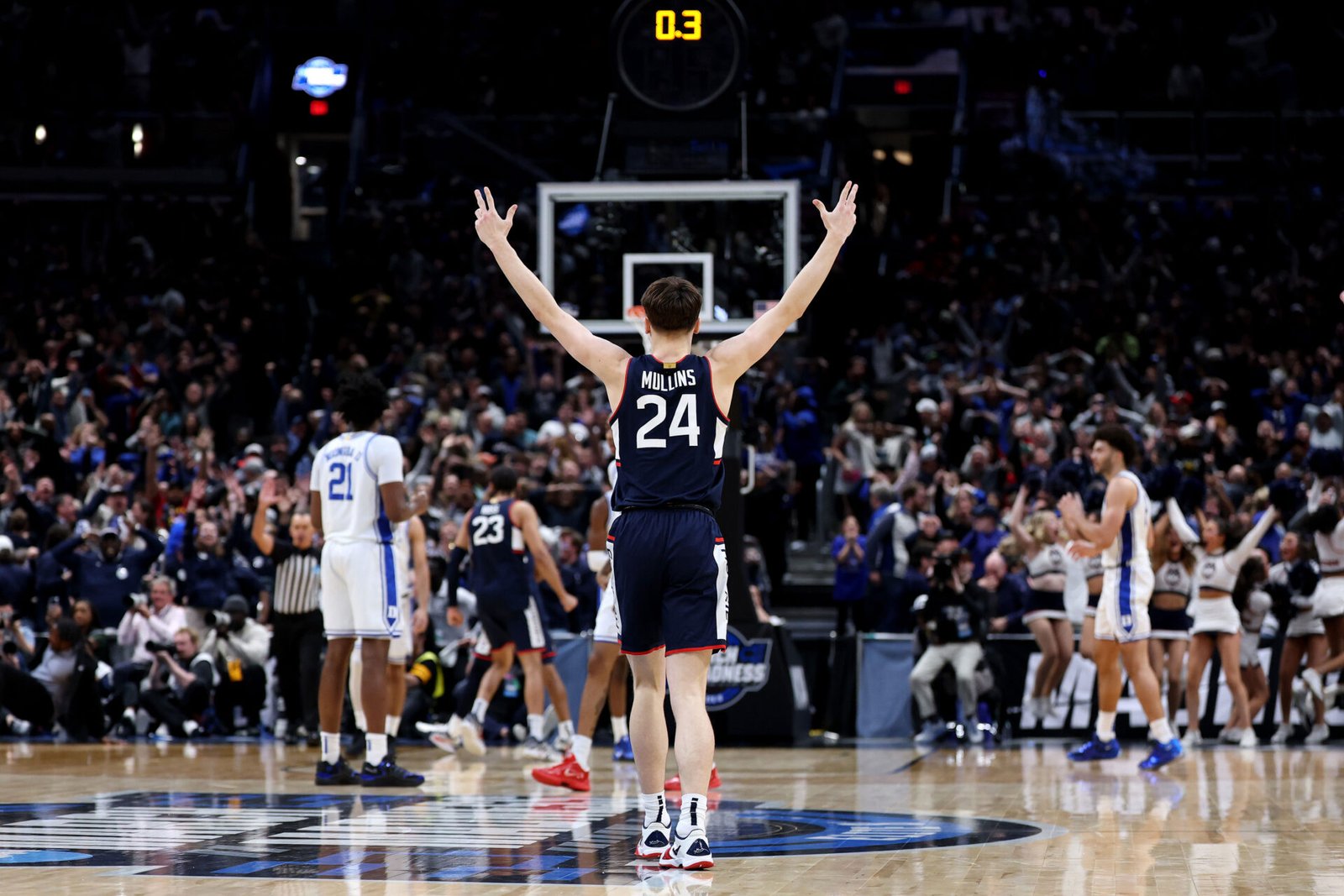
Connecticut Coach Dan Hurley has always had a way of giving his players unique nicknames, and one of his favorites is “the Bringer of Rain” for freshman guard Braylon Mullins. This moniker was inspired by Mullins’ high, arcing jumpers that seem to fall from the sky. On Sunday, in what could be one of the most iconic moments in college basketball history, Mullins launched his highest, longest rainbow yet — a 35-foot shot that splashed through the net with just 0.4 seconds left on the clock.
This incredible shot not only saved Connecticut’s season but also etched Mullins into the annals of March Madness lore. It will likely be replayed alongside legendary shots from Christian Laettner, Kris Jenkins, and Jalen Suggs. Fans across the Big East already knew Mullins as an elite shooter, but now the entire basketball world is watching him closely. And you can bet Duke won’t soon forget this game.
The Final Seconds That Defined the Game
The Huskies were down nearly the entire game against the top-seeded Blue Devils, leading only for part of the opening minute and then for the final second. With the game hanging in the balance, it was Mullins who delivered the moment that would define the night.
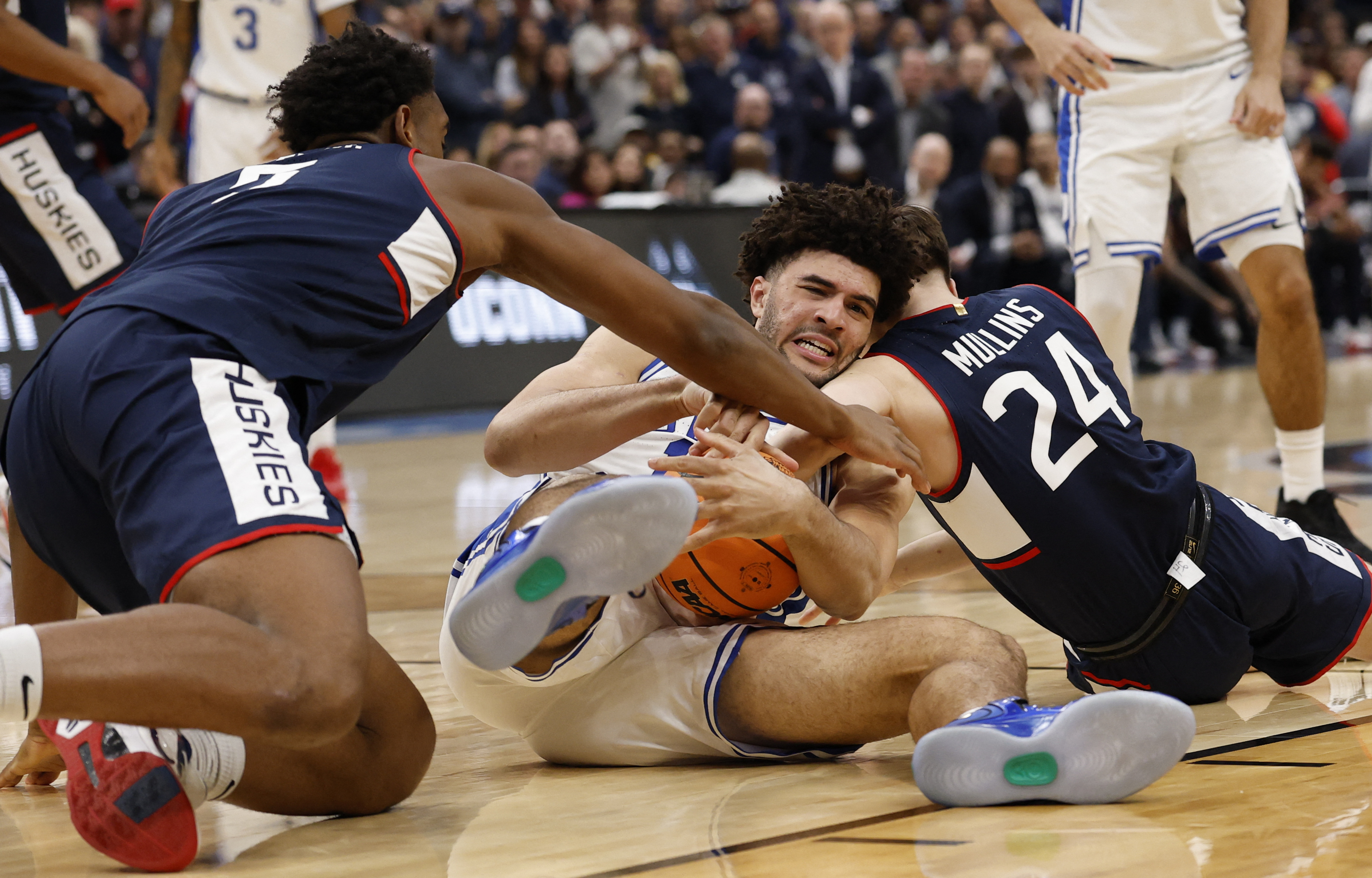
Duke had built a 19-point lead in the first half, controlled the glass, and dictated the tempo. They led for over 38 minutes and needed just one clean inbounds play to advance to the Final Four. Instead, everything unraveled. With 10 seconds remaining and a two-point lead, Cayden Boozer caught the ball near the three-point line and turned to throw it upcourt. However, Silas Demary Jr. and Mullins closed in, setting up the sequence that would change everything.
“We were just trying to make a play,” Mullins said. “I knew we were the back two guys. We left whoever was behind us.”
Demary got a hand on the ball, which popped loose near midcourt. Mullins tracked it down and pushed it ahead to Alex Karaban on the wing. But instead of taking the shot himself, Karaban passed it back to Mullins, who rose from well beyond the arc and let fly.
For a split second, the arena seemed to freeze — March Madness buffering — as if no one quite processed what had just happened. Then it dropped, and the arena rumbled. The turnover and game-winner capped a comeback that had been building all half. Tarris Reed Jr. kept U-Conn. within reach throughout, finishing with 26 points and nine rebounds as the Huskies chipped away possession by possession.
A Team That Never Gave Up
Karaban drilled a 26-foot three-pointer with 50.5 seconds remaining to cut the lead to one. Cameron Boozer’s jumper with 28.9 seconds left pushed the lead to 72-69. After Demary split a pair of free throws with 10 seconds left, the Huskies needed just one mistake. They got it — and made it count.
Not long after the final buzzer had sounded, Cayden Boozer sat stone-faced at his locker, trying to process it — reliving a moment the tournament’s history books won’t soon forget. He had found another gear this March, finishing with 15 points and six assists Sunday, but the final sequence lingered.
“I could have been slower with the ball — just take my time,” he said. “I didn’t do that and obviously they hit the shot.”
A Coach’s Reflection
After the game, Duke Coach Jon Scheyer struggled to find the right words — caught between the shock of the final sequence and the pride he felt for a team that had battled through injuries just to reach this point.
“It’s easy to look at that play — I look at every play that happened, especially in that second half, this is not about one play,” he said. “It’s about every play that put us in that position, and that’s what you don’t want to do, where one play something could happen.”
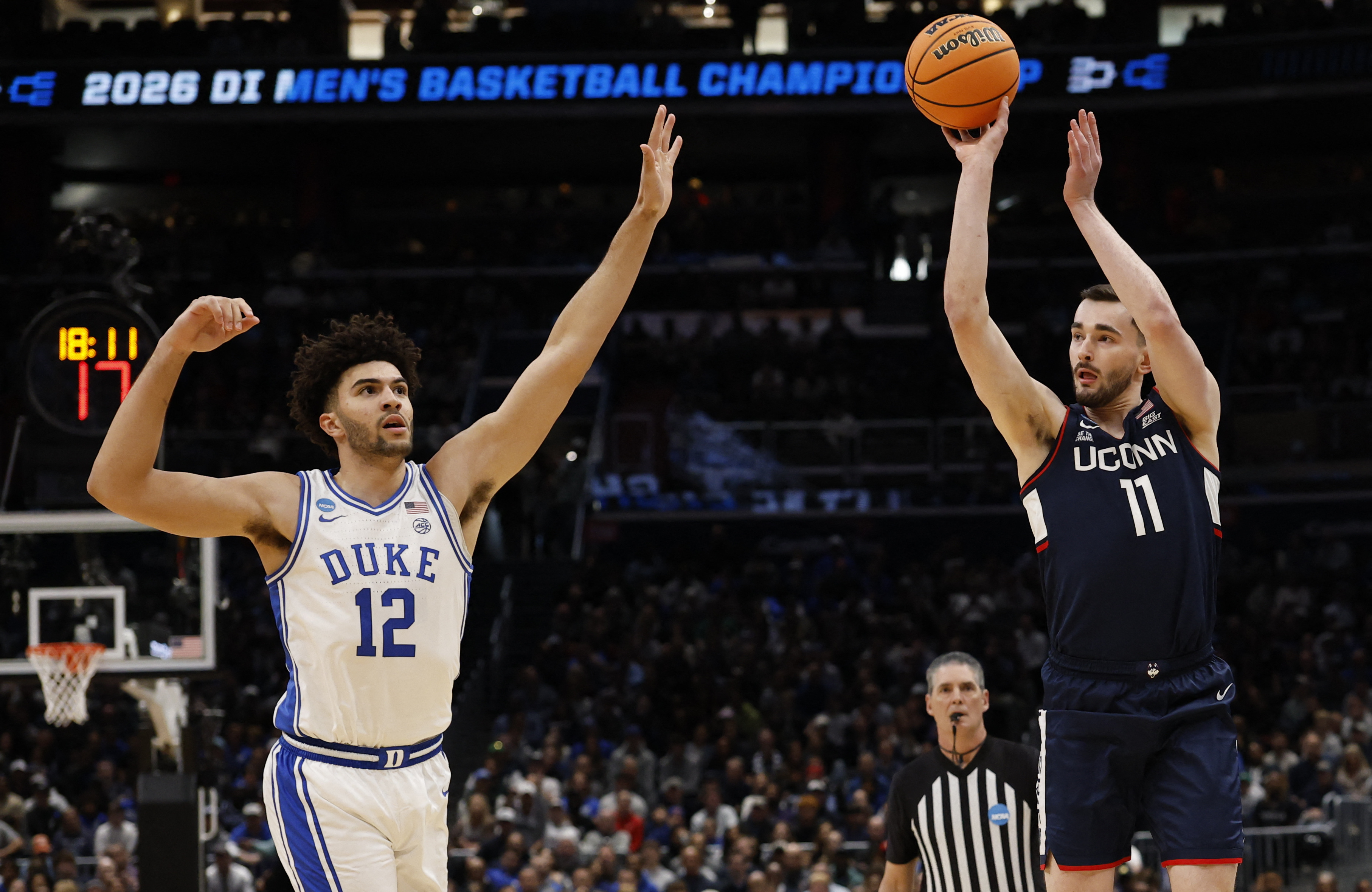
The game had been far messier than that, and both teams were working through frustrations in real time. Connecticut shooters, for example, had been ice-cold most of the night, starting 1-for-18 from three-point range.
“I knew it was bad,” Hurley said at a postgame news conference, burying his face in his hands. “I kept asking assistant coaches what it was and no one would tell me.”
But they hit four of their final five.
“It felt like a little bit of some type of justice,” Hurley said. “We missed a lot of really good shots throughout the game, and then we had to make a really hard shot. Things just evened out at that point, let’s say.”
A Team That Fought Through Adversity
Cameron Boozer says the last time he lost any sort of tournament, he was a junior in high school. He was expecting a familiar result here. His team plowed through the regular season and ACC tournament, winning at nearly every turn. He poured in 27 points and grabbed eight rebounds Sunday, but that was all lost in the quiet aftermath of a game that slipped away in the final seconds.
“I’m hurting right now,” he said. “We’re all hurting. I wish I could have gave more for those guys … Everyone’s hurting, dealing with injuries, coming and playing. It took a lot of heart.”
U-Conn., meanwhile, never played like a team that believed it was out of it. Not when the shots wouldn’t fall. Not when the deficit lingered. And not in the final seconds, when the game tilted into chaos.
“That game was a reflection on the season,” Hurley said. “It’s been a season where we’ve been dealt with injuries to key players at critical points of the year that we’ve had to overcome, and we’ve had to show a lot of fortitude and resilience and just kind of claw our way through the season.”
The Road to the Final Four
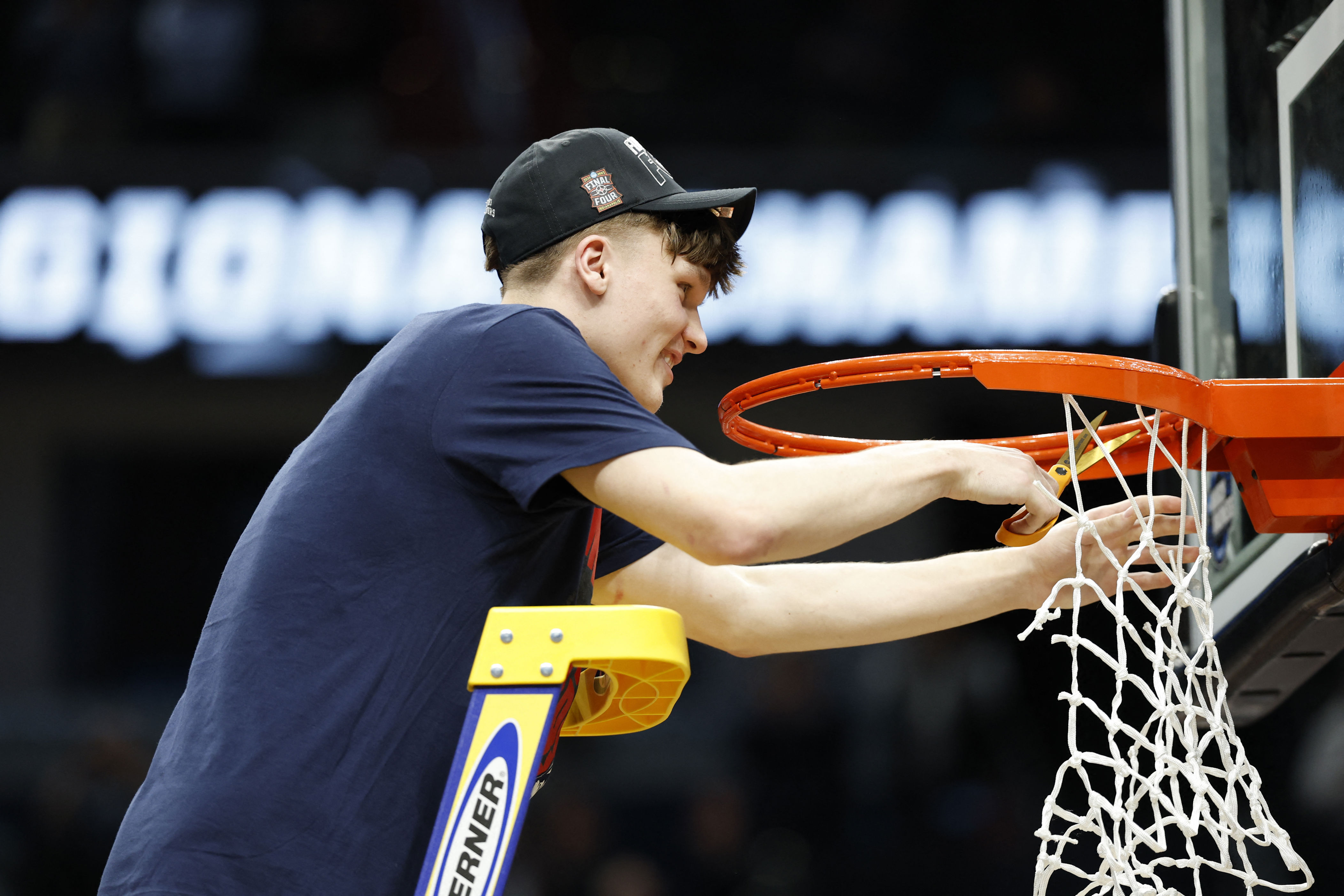
Next up is a date with Illinois in the Final Four, but the game-planning can wait. The Huskies were intent on celebrating this one. When it was over, the players gathered at one end of the court as Migos’ “Position to Win” thumped through the arena. One by one, they climbed the ladder — Demary, Reed, Karaban — a familiar ritual for a program that has grown used to cutting nets.
Mullins, wearing a Final Four ball cap and a smile, stepped to the top and grabbed the scissors for the first time. As Karaban had noted with a chuckle, “The Indiana kid sent us to Indianapolis.”
The freshman with the soft release and fearless eye climbed with the same calm he showed seconds earlier. He snipped a piece of net as his teammates roared below — a sharp-shooter barely a year removed from high school gyms, now part of March’s permanent memory.