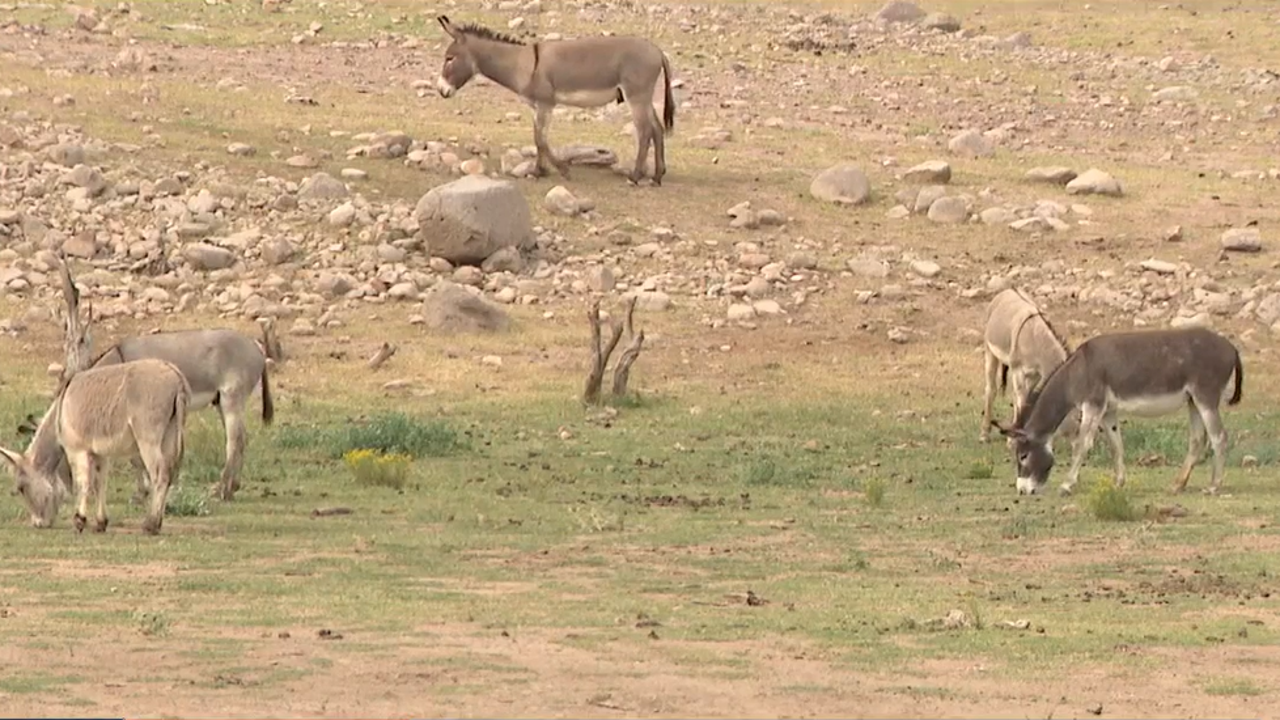
Burro removal plans start in Lake Pleasant to control herd size
The Situation at Lake Pleasant
Wild burros have long been a part of the natural landscape around Lake Pleasant in Arizona. However, the Bureau of Land Management (BLM) has recently announced a new initiative to significantly reduce the number of these animals in the area. The goal is to improve safety for both the burros and the local community by managing the population more effectively.
Currently, there are approximately 2,300 burros in the region. Officials plan to remove over 1,000 of them, aiming to bring the herd down to a target range of 140 to 250 animals. This effort is part of the BLM’s broader strategy to maintain an appropriate management level for the burro population.
A Familiar Sight
For many residents and visitors, the presence of wild burros is a common and cherished sight. Kaydence Bonamo, who visits Lake Pleasant every summer, described the animals as “very familiar.” Her family has a long history of visiting the lake, and she often sees the burros while her father rents boats for guests.
Mark Kline, another visitor, noted that he saw between 30 and 40 burros on a recent Sunday. He said that some people even pull over just to take photos of the animals. “We come out, get out in the desert, you like to see all the animals and everything so it’s always nice to see,” Kline said.
By the Numbers
The BLM’s plan involves reducing the burro population from 2,300 to about 200. According to the agency, the appropriate management level range is set at 140 to 250 animals. This figure is based on environmental and safety considerations, as well as the need to balance the ecosystem.
Perspectives from the Community
Soleil Dolce, the Vice President of the Arizona Equine Rescue Organization, believes the BLM is taking this action due to the increasing interaction between burros and urban areas. “If you look at all of the construction and building and things that have been happening out there in that area – a lot of the territory that the burros used to have available to them has shrunk,” Dolce explained. “So we’re having a lot more burro interfaces in urban areas.”
Kline shared his concerns about the potential dangers of burros crossing roads, especially with vehicles like RZR’s speeding by. “It could become an issue,” he said.
Destany Guerra, a nearby resident, expressed mixed feelings. “I think being a resident out here near Lake Pleasant it’s a beautiful sighting when you see these lovely donkeys,” she said. “But at the same time, if they are fighting for resources because unfortunately we’re moving in and limiting those resources, what happens to them right? We don’t want them to suffer.”
Concerns About the Plan
While the BLM aims to improve safety, some community members believe the approach may not be the best solution. Dolce pointed out that many burros end up in substandard holding facilities where they face long-term stress and trauma. “They would go into holding facilities with the BLM, they would try to adopt out as many as they could,” she said. “But quite often the fate is they get stuck in long term holding pens that are substandard conditions. Very traumatic for the animals.”
Bonamo echoed these concerns, emphasizing that the burros have lived in the area long before humans arrived. “It’s so sad. This is their home before ours,” she said. “So I think respect them. They respect us obviously so just let them be!”
Next Steps
According to the BLM, contractors will conduct gather operations using temporary bait and water traps. These traps consist of a series of corral panels stocked with water, forage, or both. Once gathered, the burros will be transported to the Arizona Wild Horse and Burro Training and Holding Facility in Florence, where they will be prepared for the BLM’s Adoption and Sales Program.
The BLM officials stated that the priority will be to gather burros that are outside the herd management area on state and private lands, where they can cause damage to property and pose public safety concerns.
