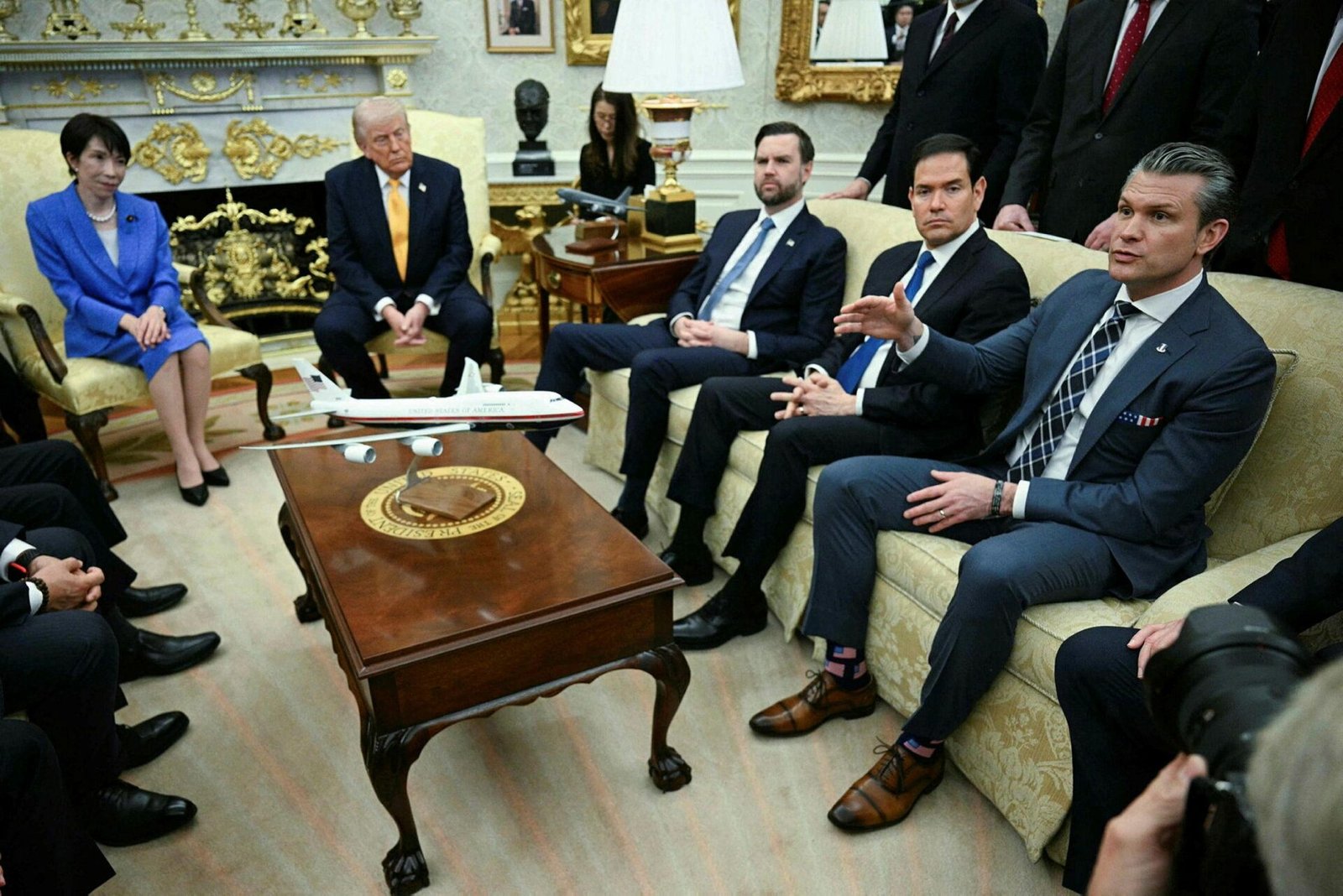
Vance Pushes for Swift Exit from Iran Conflict, Ignoring Israel’s Fate
JD Vance’s Focus on a Swift Exit from the Iran War
JD Vance, the Vice President of the United States, has shown a clear determination to end the war with Iran as quickly as possible. His primary motivation seems to be protecting his political future, rather than considering the implications for U.S. allies such as Israel. This approach has raised concerns about whether he is prioritizing domestic optics and support from the MAGA movement over broader regional strategic interests.
The situation came into sharper focus when a group chat on the Signal app was accidentally shared by Defense Secretary Pete Hegseth. Journalist Jeffrey Goldberg, who was mistakenly included in the conversation, revealed details about a potential attack on Yemen. The discussion also provided insight into Vance’s views on America’s partners and allies, which were clearly not aligned with the traditional American foreign policy approach.
In the conversation published in The Atlantic, Vance expressed strong opposition to attacking the Houthis in Yemen. He feared that such an action could lead to the U.S. being drawn into a larger conflict in the Middle East. Additionally, he voiced concerns about rising oil prices, which he believed could negatively impact both the presidency and his own political ambitions.
Other participants in the discussion included Secretary of State Marco Rubio, National Intelligence Director Tulsi Gabbard, and Stephen Miller, Trump’s right-hand man. However, Vance stood out for his resistance to any military action that wasn’t strictly defensive.
Israel would do well to remember one key reason why Vance opposed the attack: he had little interest in supporting America’s traditional allies. He frequently criticized them and seemed more concerned with maintaining his image than with the needs of U.S. partners.
Vance wrote in the chat that he was unsure if the president was aware of how inconsistent this stance was with his message on Europe. He argued that the attack would benefit Europe more than the U.S. Later, when he realized he was in the minority, he said, “If you think we should do it, let’s go. I just hate bailing Europe out again.”
At a recent cabinet meeting, Trump informed his ministers that Vance was leading the cease-fire talks with Iran. According to Axios, Vance had already begun preparing for this role, speaking twice with Prime Minister Benjamin Netanyahu. During one of these conversations, Vance criticized Netanyahu for giving Trump an overly optimistic prediction about the war.
Vance, who served in the Marines and worked as a military correspondent in Iraq, understood the realities of replacing a Middle Eastern regime. As a result, he did not believe Netanyahu’s rosy portrayal of postwar Iran. Some White House officials even accused unspecified members of the Israeli government of smearing Vance.
CNN reported that Vance had worked behind the scenes to prevent the U.S. from cooperating with Israel in the war against Iran. When he realized that Netanyahu had succeeded in convincing Trump, he tried to offer a different perspective.
According to CNN, Vance was present at meetings and was the most vocal advocate for a narrow military operation similar to the one in Venezuela. Since then, Vance and some of Trump’s aides have been seeking ways to end the war, fearing that escalation could harm Vance’s future campaign.

Vance, who turned 40 last summer, is young and lacks experience. He entered politics in 2021 by running for a Senate seat in Ohio under the “America First” slogan, promising to prevent wars. His appearances on Tucker Carlson’s Fox News show helped elevate him from a no-hope candidate to a senator and eventually to Trump’s vice presidential pick.
After becoming a senator in 2023, Vance launched a campaign to become Trump’s running mate, writing an article in the Wall Street Journal praising Trump for avoiding wars. As vice president, he consistently portrayed Trump as the “candidate of peace” while criticizing Kamala Harris for promoting “stupid wars.”
During the campaign and after entering the White House, Vance positioned himself as Trump’s attack dog on television. He often defended Trump in media interviews and engaged in debates with journalists. After the invasion of Venezuela and the abduction of Nicolas Maduro, Vance quickly posted on X and gave TV interviews.
However, when the Iran war began, Vance disappeared. He didn’t even tweet. When he finally gave an interview several days later on Fox News, he claimed the operation would be short and not a long, bloody war.
Trump chose Vance as his vice president partly because of his value as an attack dog for the media. Vance also regularly attacks issues that matter to him personally, and he has nothing but praise for figures like Russian President Vladimir Putin.
But he struggles to hide his disdain for American allies, whom he believes exploit the U.S. His confrontation with Ukrainian President Volodymyr Zelenskyy in the Oval Office was a stark example of this attitude. “Have you said thank you once?” he growled at Zelenskyy.
One pressing question in Washington, which should also concern Israelis, is why Vance was chosen to lead the sensitive negotiations with Iran instead of Trump’s usual envoys, such as Jared Kushner or Steve Witkoff.
Some theories suggest that Iran specifically requested Vance, and the White House obliged. It’s hard to imagine anyone happier than Vance to pay Israel back for what he sees as a burden. Another theory, fitting Trump’s style, is that this was a “present” to Vance, forcing him to be associated with the war he wants to escape.
Trump addressed Vance’s role early in the war when asked where his vice president was. He denied they were at odds over the war, saying, “We get along very well on this.” Then he paused and added, “He was, I would say, philosophically a little bit different than me. I think he was maybe less enthusiastic about going, but he was quite enthusiastic.”
Regardless of Trump’s reasoning, if Vance actually makes it to the negotiating table, he is expected to arrive desperate. The only way he can save his political career is by presenting a deal to the MAGA movement, regardless of its content, and positioning himself as the savior of the American public from an unnecessary war.
Like Trump, Vance’s loyalty is to his own narrow political interests. And when Trump is also seeking an exit ramp, it seems the White House is now ripe for far-reaching concessions. Vance is certainly more open to this than many professional staffers in Rubio’s State Department or even Witkoff and Kushner, whose private businesses depend on Arab capital.
Another conclusion is that Washington will likely seek to finish the talks as quickly as possible. Vance wants to leave Iran behind and doesn’t care where that leaves Israel. This is especially true given that most Americans also want to end the war; they, too, don’t really care what price Saudi Arabia, Qatar, or Turkey will pay.
And if Vance has the chance to leave Israel struggling, that would be, for him, a bonus.
