Orban’s Toughest Election Challenge in a Decade
A Political Crossroads for Hungary
Hungarian Prime Minister Viktor Orbán, a key ally of former U.S. President Donald Trump, is facing one of the most challenging re-election campaigns of his political career. This election could determine whether he remains in power or if a new leader takes over, potentially shifting Hungary’s position on the global stage.
The upcoming vote on April 12 has become a pivotal moment for both Orbán and the broader European political landscape. Recent polls suggest that Orbán’s Fidesz party is trailing significantly behind the Tisza (Respect and Freedom) party, which was founded in 2024. The Tisza party, led by Péter Magyar, a member of the European Parliament, is currently leading with over 50% of the vote in a competitive five-party race.
Orbán, who has been in power since 2010, has long positioned himself as a strong voice against what he perceives as the European Union’s interference in national affairs. His leadership style has often clashed with EU policies, making him a controversial figure among many European leaders. However, his alignment with Trump has provided a unique political alliance that has bolstered his support.
A New Threat to Orbán’s Power
Tisza’s rise as a formidable opposition force marks a significant shift in Hungarian politics. With recent polls showing a clear lead over Fidesz, the possibility of Orbán losing the election is no longer just a theoretical concern. Analysts from the Eurasia Group have noted that this election represents a real turning point for Orbán, given the erosion of his traditional support base.
Magyar, who has been vocal about his pro-European stance, could replace Orbán if Tisza secures a majority. This would not only mark a change in leadership but also signal a potential shift in Hungary’s approach to the EU and its foreign policy.
International Support for Orbán
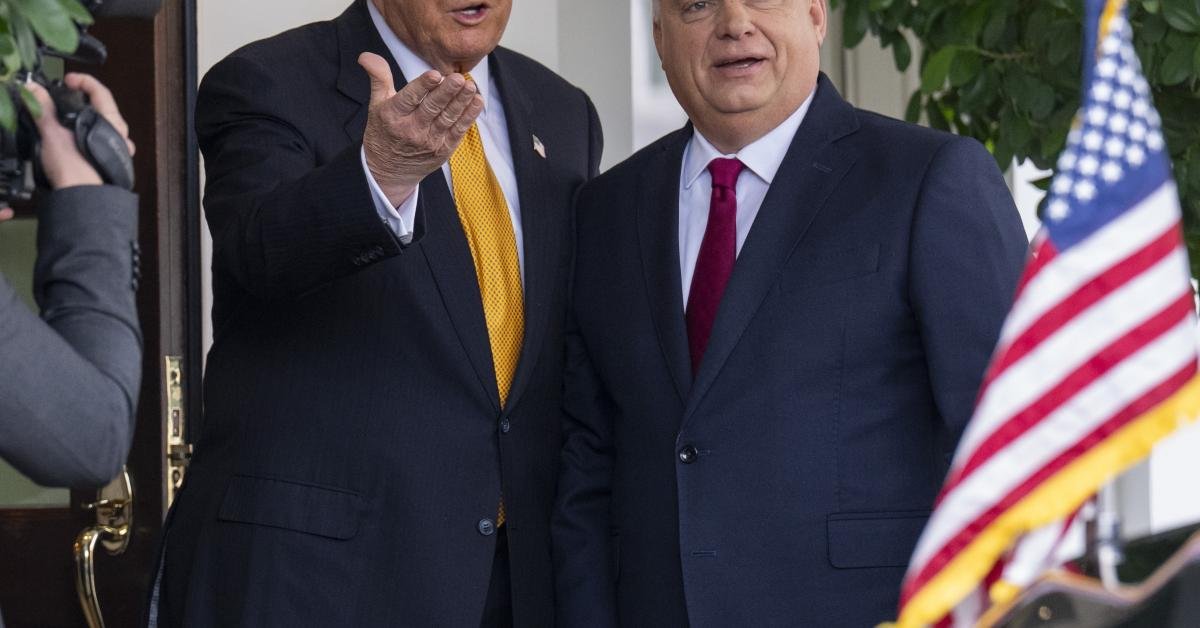
Despite the challenges, Orbán continues to receive strong backing from high-profile figures in the U.S. government. Trump recently endorsed Orbán, praising him as a “strong and powerful leader” and a “true friend.” Secretary of State Marco Rubio also visited Budapest, where he emphasized the importance of Orbán’s re-election for Hungary’s stability.
Vice President JD Vance is set to visit Hungary just days before the election, further highlighting the U.S. administration’s interest in ensuring Orbán’s continued leadership. These visits underscore the strategic importance of Hungary in the broader geopolitical context.
Orbán’s Tensions with the EU
Orbán’s relationship with the EU has been marked by frequent conflicts. His recent decision to veto a $105 billion aid package for Ukraine has drawn criticism from European leaders. Hungary’s single vote prevented the release of funds, despite the plan being approved by all other EU members.
This move has strained relations with the EU, with some officials suggesting that Orbán’s actions are undermining the bloc’s unity. An unnamed EU diplomat reportedly described the Ukraine vote as “the straw that broke the camel’s back,” indicating a loss of hope in persuading Orbán to reconsider his stance.
Trump’s Criticism of the EU
Trump has consistently criticized the EU, arguing that it has harmed U.S. interests through unfair trade practices. During his second term, he claimed the EU was formed to “do damage to the United States and trade.” He has also expressed concerns about NATO, particularly regarding member states not contributing adequately to military defense.
His recent interest in acquiring Greenland, an autonomous territory of Denmark, further illustrates his skepticism toward European alliances. This stance has contributed to a growing tension between the U.S. and European nations, with Orbán playing a central role in this dynamic.
Public Perception of the U.S. in Hungary
Despite these tensions, Hungarians maintain a favorable view of the U.S. According to Pew Research, 78% of Hungarians believe U.S. democracy works “very well” or “somewhat well,” compared to lower percentages in other European countries. Additionally, 60% of Hungarians have a “favorable” view of the U.S., highlighting the country’s strong ties with America.
This positive perception of the U.S. underscores the complex relationship between Hungary and the U.S., even as Orbán navigates the challenges of maintaining his political influence amid rising opposition. The outcome of the April 12 election will likely shape Hungary’s future direction and its role in the broader European and global landscape.
